Build, observe, optimise, attribute, secure. Why teams end up with five separate tools for one agent, and what changes when they share a single trace.
Ask a team running agents in production what their stack looks like and you get a list: one tool to build the agents, another for traces, a gateway someone set up last spring, a cost dashboard finance asked for, and a security review that happened once before launch. Nobody designed it that way. It accreted.
Each of those tools does a real job. The trouble is that each one sees a different slice of the same run, and none of them can answer a question that crosses slices, like "did the cheaper model we switched to last week make the agent less accurate for our biggest customer?"
The five jobs
Build and run
Define agents with instructions, models, tools, and context, then chain them into workflows with triggers and review steps. Glean and n8n cover this ground for knowledge work and automation.
Observe and trace
Record every request, span, tool call, token count, and latency, and tie each to the run that produced it. Langfuse, Grafana, and Datadog are the familiar options.
Optimise
Change what happens on the next run. Send each request to the cheapest model that meets your quality bar, serve repeats from a cache, trim long prompts, and enforce limits in the request path. Most teams assemble this from LiteLLM, GPTCache, LLMLingua, and their own glue code.
Attribute
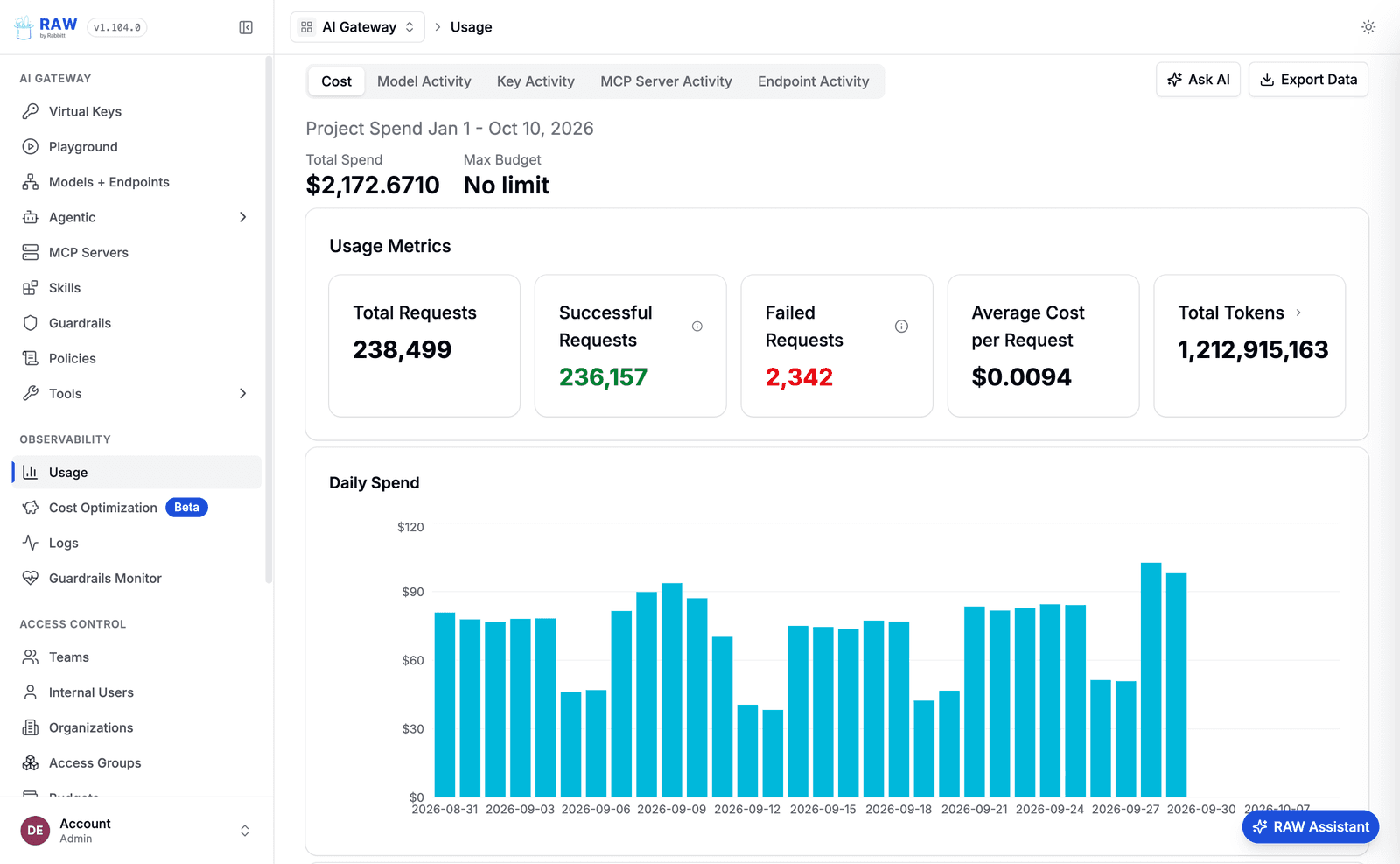
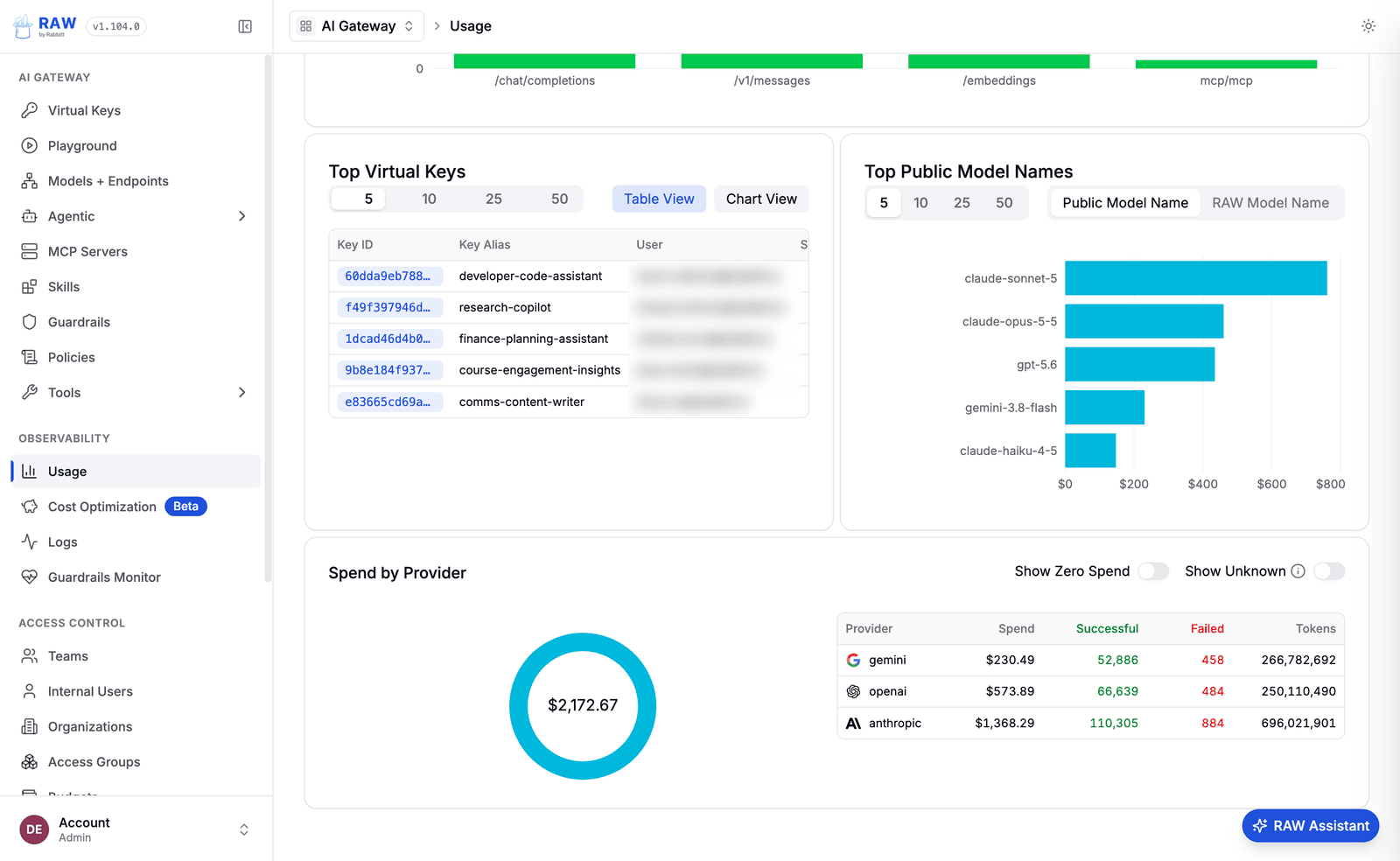
Put every dollar against the agent, team, customer, and step that spent it. FinOps tools like CloudZero and Vantage do this for infrastructure. Agents need the same thing at the level of a single run.
Secure
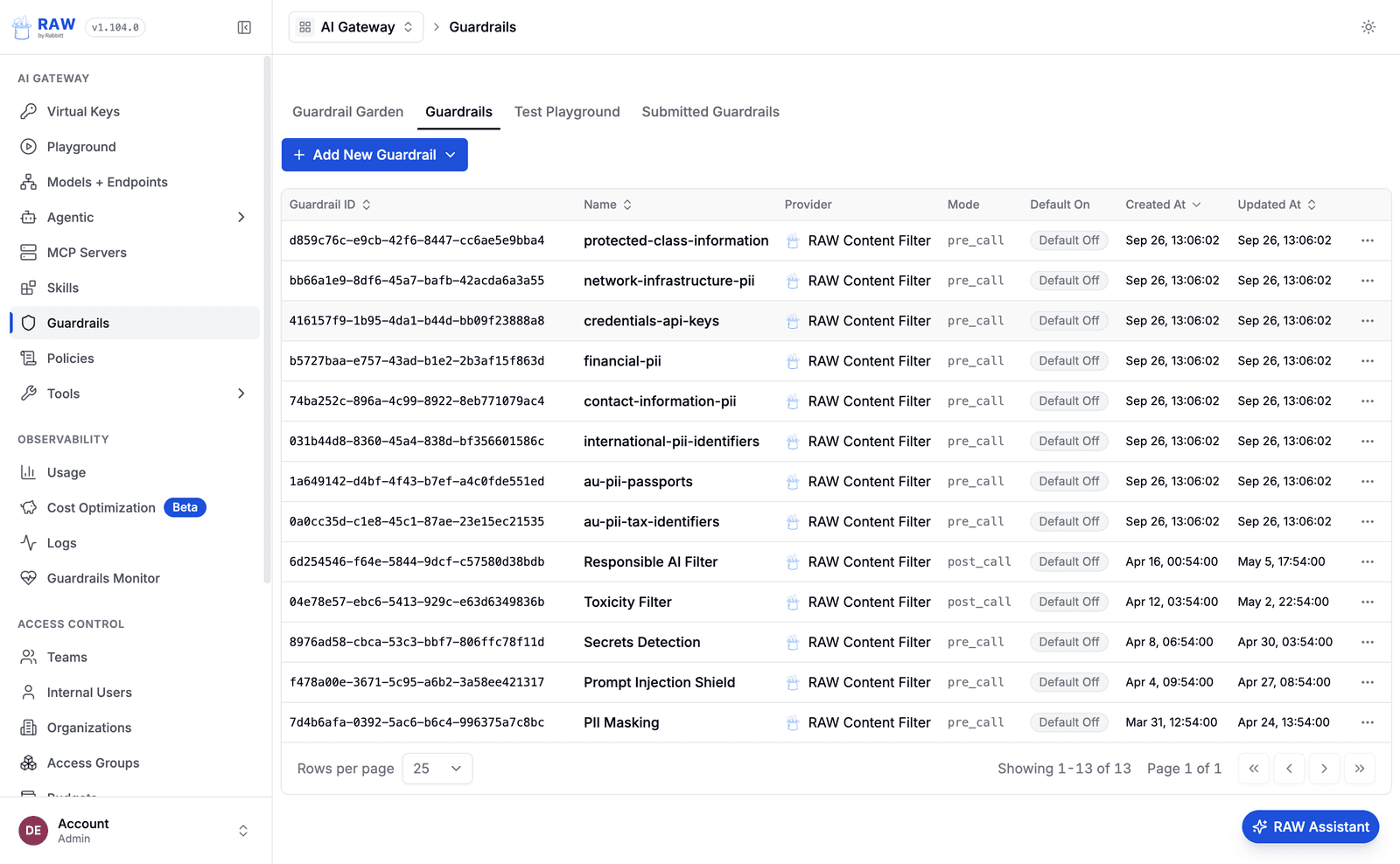
Test agents adversarially before release, block PII, secrets, and prompt injection while they run, and keep the evidence a security team needs to sign off.
What changes with one shared trace
When the five jobs read and write the same trace, effects show up everywhere at once. A routing change in Optimise appears as lower cost in Attribute and a latency shift in Observe. A red-team finding in Secure turns into a guardrail in Optimise. Closing that loop across five separate products usually means a spreadsheet and a lot of Slack threads.
You do not need to buy all five at once. Most teams start with tracing, add cost attribution when finance asks, and reach for optimisation when the bill grows. The point is to choose tools that can share data, so you are not rebuilding the picture by hand each time.
FAQ
Do I need a separate tool for each of the five jobs?
No. Many teams cover two or three jobs with one platform. What matters is that the tools share run and trace IDs so you can answer questions that cross jobs.
Which job should I start with?
Observation. Tracing is cheap to add and every other job depends on knowing what your agents actually do.
See what your agents could save.
Bring one agent. We will trace it, optimise it, and show you the cost and accuracy difference.